Thứ Bảy, 30 tháng 7, 2016

The Expert's Guide to Keyword Research for SEO Copywriting

The Expert's Guide to Keyword Research for SEO Copywriting

Keywords are just words—nothing scary or technical about them. So why are so many writers averse to doing keyword research?
There's a misconception among copywriters that SEO keyword research takes the creativity out of writing. But optimizing your content for search engines doesn't have to limit its quality any more than a round of copyediting. Just as editing improves your writing's readability, keyword research improves your writing's relevance and exposure (and often, its clarity as well). Why wouldn't you take steps to ensure that your intended audience can find your work?
Keyword research can easily become a natural part of your writing process. In this article, I'll walk you through my keyword research process, from the steps that take place before I begin writing a piece of content to the final steps of optimizing that content, keyword-wise, when I publish the piece.

Keyword Research for Copywriting: The First Steps

It's important to get in the habit of doing keyword research before you start to write an article. A lot of copywriters just write what they want to write, and then try to impose a keyword phrase on the article after the fact. This sets you up for one of two pitfalls:
  • You choose a keyword that doesn't really fit and sounds forced.
  • You choose a keyword that fits but isn't particularly relevant to your audience or is too competitive to rank for.
Admittedly, sometimes you have a great idea for a blog post and you just have to write it and worry about SEO later. But it's an excellent idea to have a running list of keywords that you plan to target with content. What does this buy you?
  • No more writer's block: Think of your keyword list as a content idea generator. When you need to write a piece but don't know what to write about, craft an idea around one of your keyword phrases.
  • Built-in priorities: Your keyword list—assuming it's properly organized—is also an ordered to-do list. If a certain keyword is driving lots of traffic or conversions, and you don't yet have dedicated content optimized for that keyword, write that content first. Move down your list according to audience demand.
  • No shoehorned keywords: When you have a keyword phrase in mind before you put pen to paper, so to speak, your writing will naturally include the keyword. It's much easier to avoid that awkward, forced feel of bad SEO copywriting.
The best way to prioritize your copywriting tasks is to arrange your keywords in order of importance—that is, according to which keywords aredriving traffic, are relevant to your audience, and don't yet have site content associated with them. Start with the keywords that are driving the most traffic first and work your way down the list. (Don't have any keywords yet? Easy! Use a keyword tool like WordStream's below.)
Keyword Suggestion Tool
Once I've chosen a keyword to target, I open up a Word document and make a list of the keywords in that keyword group, in order of frequency. (NOTE: We group our keyword research into small clusters of tightly related terms, which has obvious benefits for PPC, but it's also very helpful for SEO copywriting. We've written about keyword grouping extensively on this site; you can learn more in our keyword grouping white paper.)
Let's say I choose the keyword "make money online." My list might look something like this:
make money online, making money online, online make money, how to make money online, make money online with affiliate program, ways to make money online, how to make money in online marketing, earn money online, make money online with pay per click
This task provides me with a list of popular keywords as well as less popular but related variants that I can (and should) include in my article or blog post. This accomplishes two good things at once:
  • By including variations, I'm targeting a broader base of searchers (all interested in the same thing) with a single piece of content. This is more efficient than writing a full article for every single unique keyword.
  • Using variations, as opposed to the exact same keyword phrase over and over, sounds more natural and closer to the way you would write if you didn't have to worry about keywords.

What's Next? Write It!

You've done the bulk of your keyword research; the next step is to write your damn article. Include the keywords from your list, but don't obsess about keyword density or you'll probably overdo it. WordStream's Keyword Density Checker tool can help you keep track of where you've inserted your keywords. Just remember to use those keywords in healthy moderation. Since you're writing an article specifically designed to target this group of keywords, they should fit into the text organically (no pun intended).
Where do the keywords go?
  • In the body of the text, of course. Here's a good trick: Highlight your keywords to get a sense of whether you're using them too little or too much. Use different colors, if you need to, to keep track of how many variations you're using.
  • In the title. It's a good idea to use your primary keyword here, rather than a lower-volume variant. (See our title tag guide for more help with writing SEO-friendly titles.)
  • In subheads. Subheadings are good organizational practice as well as a good opportunity to work in more keywords.

SEO Keywords

The Final Touches, or, Cramming In a Few More Keywords!

Assuming you're in charge of actually publishing your article online (via your content management system or blogging software), there are a few more ways you can use your keyword research to optimize your article. (If you don't handle the posting, you can pass these tips on to whatever underling does.) Include your keyword or a variation in these additional places:
  • Meta title: Many CMS's allow you to specify separate title (H1) and meta title tags. The meta title is the one that appears in search engine results. (Accordingly, if the meta title is fully optimized, you have a little more wiggle room for creativity in the H1 tag.)
  • Meta description: Use your writerly skills to compose a meta description that includes relevant keywords without sounding mechanical or simply rehashing the headline, and you may boost your click-through rate.
  • Image file names/ALT attributes: If you're including pictures on your page or in your post, use the keyword in the file names (e.g., make-money-online.gif). Also be sure to use the ALT attribute to tell search engines and users what the picture is. This text, and the caption or surrounding text, is the primary way that Google knows what the picture is.
  • Anchor text: Link to your new page from several other pages on your site, using your keyword as the anchor text.
That's it! By which I mean, this is about the extent of what you, as a copywriter, can do in terms of on-page, keyword-focused SEO.

Is That Really It?

Well, not quite—there's a bit more you can do, post-publishing, by tracking your SEO results through analytics:
  • Look at keyword referrers for the page. Are they what you expected? Are there new keyword variations? Refactor them into your research. Consider adding them to the page or writing additional content from a new angle.
  • Check your search engine rankings for your primary keyword. This is variable and not very scientific, but it gives you a baseline idea of where your piece is ranking. (Just remember that better rankings are worthless if they don't increase traffic.) If you're not cracking the first couple of pages, you may need to devote more time to off-page SEO (such as link building) or target less competitive keywords.
  • Take note of what works, and do it again. Do your visitors' search queries tend to be phrased as questions? Use questions in your content (and titles). Do they like "how to" keywords? Use 'em!
If you incorporate good keyword research practices into your writing process—instead of viewing SEO as a separate process to be applied after the fact—both your writing and your rankings will benefit. WordStream's SEO tool pack can help you generate keywords and insert them easily into your copy for instant SEO success!
Resource:wordstream.com

10 Tips for Effective #SEO Copywriting

10 Tips for Effective SEO Copywriting | Search Engine Journal
“SEO” and “copywriting”—two specialized fields that can seem at odds with each other, yet have entered into a unique marriage. Together, they have created the ultimate offspring in the form of content marketing. Theirs is a complicated relationship that can take some work. One partner is a pleaser and the other is a doer. Inherently, SEO wants to please search engines and copywriting wants to give people information that helps get something accomplished.
There once was a time when these goals were in almost direct competition with each other, but today’s world has changed all of that. Thanks to some much-needed maturity on the part of Google, the way to please a search engine is by giving people the information they need. Imagine that.

The Power of a Good Partnership

A marriage is the ultimate example of partnership, therefore making it an ideal analogy for our friends SEO and copywriting. It’s similar to sales and marketing in a way in that the two work together to deliver a sort of 1-2 punch with results clearly in mind.
SEO is the art and science of enhancing website content or manipulating other elements to attract search engine crawlers and, ultimately, outrank competitors. Copywriting is the art and science of creating content that provokes a reader into taking a specific action (think buying a product, requesting more information, signing up for a mailing list, clicking a link, etc). The power comes when SEO delivers the ranking and copywriting seals the deal.
Figuring out how to balance this relationship can take some trial and error—and some good old-fashioned advice from folks who’ve “been there”. So, without further ado, the following are 10 tips to help you create harmony out of this marriage—and develop some darned effective SEO content.
10 Tips for Effective SEO Copywriting | Search Engine Journal

1. Title it Right

Titles are commonly recognized as the most important element of copywriting. When it comes to titles, there are two factors at play here:
  • Reader Attention: Does your title grab this instantly? Think like your intended reader and write a title that would make YOU want to click.
  • Keywords: Is your title really SEO friendly? Not if it doesn’t include at least one keyword. Note, however, that the inclusion of a keyword should NEVER come at the expense of grabbing the reader’s attention.
The combination of a title and subtitle can be extremely effective as well. It gives both readers and search engines more information about a post’s topic.
Authority Blogger has developed a handy guide with SEO headline formulasknown to work time and time again—check it out.

2. Make the Message Matter

This starts with really knowing your audience. Who are you talking to? What do they need or want? You might leverage trending topics as inspiration for what to write about as well as comments you’ve received from customers. With less interesting industries, it’s all about thinking outside the box to come up with topic matter.
10 Tips for Effective SEO Copywriting | Search Engine Journal
From here, you can start flushing out the meat of your content. Whatever you do, avoid the temptation to talk all about you. Make your message all about your readers. Tell them a story, inspire them, solve their problems, empathize with them, make them feel or want something—and do it with an active voice.

3. Leverage Formatting to Increase Consumption

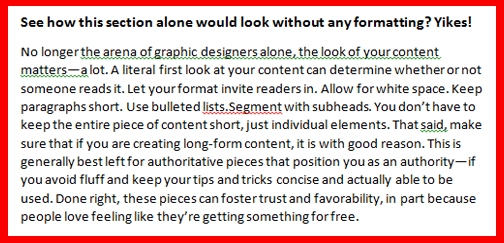
No longer the arena of graphic designers alone, the look of your content matters—a lot. A literal first look at your content can determine whether or not someone reads it. Let your format invite readers in.
  • Allow for white space: It’s all the rage right now on just about every website, and for good reason – it gives the reader room to breathe and take everything in one piece at a time.
  • Keep paragraphs short and friendly: Short paragraphs speak to readers. Smaller blocks of information make it much easier to consume larger pieces of content (oxymoron?). Content immediately becomes more friendly and inviting.
  • Use bulleted lists: Let me rephrase this, “Use bulleted lists as a complement to your content – not in place of it”. While bulleted lists can do wonders to help highlight list-type items, there’s nothing more annoying than a piece of content made entirely from bulleted lists.
  • Segment with subheads: This is content writing 101 – subheadings help organize your content so readers can easily navigate your content before or after they’ve read it. Not only that, it’s another place inside of your content that you can reassure the reader they’ve made the right choice in deciding to read on. Try including benefits in some of your subheadings to increase perceived value.
You don’t have to keep the entire piece of content short, just individual elements. That said, make sure that if you are creating long-form content, it is with good reason. This is generally best left for authoritative pieces that position you as an authority—if you avoid fluff and keep your tips and tricks concise and actually able to be used.
Done right, these pieces can foster trust and favorability, in part because people love feeling like they’re getting something for free.
Formatting

4. Trade Keywords for Topics

Once considered the golden children of SEO, keywords have almost become the black sheep of the SEO family. While there’s a reason for that, it’s not entirely fair or right. Keywords do matter insofar as they directly relate to your topic and the natural delivery of your message (yes, I mean readability—see the difference?). Not only that, keywords are still one of 200 ranking factors – which means they should definitely be considered.
When you focus your efforts on writing what matters, your keywords will enter the arena naturally. And, in many cases these will be long-tail keywords that provide really great information about your content. One good rule of thumb is to make sure you get your primary keyword in your headline, and your targeted secondary keyword(s) in your content introduction as well as your conclusion.
If ever you are worried that your keyword density might be too high, even when writing naturally, there are a plethora of SEO tools to help you keep your keywords in check.

5. Link with Intention

10 Tips for Effective SEO Copywriting | Search Engine Journal
Links and keywords are like kissin’ cousins when it comes to their newfound virtual black-listed reputations. And, like keywords, this standing for links is not properly warranted. Simply because too many people abused backlinks does not make them bad. It was the misuse of these elements that was bad.
So what’s proper use? There are two forms:
  • Outbound Links: These connect your material to other pages or sites of high authority. These should be used sparingly with perhaps one or two per piece and generally within the first half of your content. However, there is value in connecting with other relevant sites and sending love their way – both in the eyes of Google as well as industry influencers.
  • Internal Links: These links further showcase your knowledge or offerings by keeping people within your universe, if you will. Be careful to select pages that are appropriate and don’t go overboard and link to every page in your site. You want to enrich and supplement the user experience, not squash it.
The same philosophy that applies to keywords applies to the anchor text for your links. They must always read naturally and tell people what information they will be taken to.

6. Add Pictures for Additional Flair

As much as I love words (for obvious reasons!), people respond better to pictures. Images tie the visual to the auditory allowing people more opportunities to really comprehend your message. Pictures can also help you set your content apart from the plethora of generic text that’s available on the greater world wide web.
Aside from the obvious aesthetics of adding pictures, they also can hold extra SEO value. Optimizing alt text, file size (for load times), captions, and file names are all ways you can maximize search engine benefits.
Want to up the ante with your pictures? Try creating an original image for the headline of your article complete with the title included in it.

7. Call All to Action

Ah, yes, we need to remember that there’s a point to all this great stuff we write. We actually want someone to do something because of it. This is the end goal of copywriting as a whole. Enter the Call to Action, or CTA for short.
CTA’s that appeal to what matters to the reader are the ones that will rock your results. Here are just a few things that people might need or want:
  • Immediate help
  • A problem solved
  • Just the facts, Jack
  • To save money
Writing your CTA’s with these needs in mind will resonate with readers on a deeper level. You can get more tips on how to craft killer calls to action in Greg Secrist (my brother)’s article here on Search Engine Journal.

8. Make the Meta Mega

After taking the time and research to craft an in-depth, authoritative post on a topic relating to your industry, a meta description can really feel like an afterthought. Don’t fall victim to this! A meta description has mega power if you use it right. It’s as much about presentation and ranking as any other piece of your content.
From an SEO standpoint, meta descriptions are how you help Google and other search engines understand what your content is all about. This 150-160 character snippet of text next to your SERP makes sense of keywords. Although using exact keywords is debatable, some version of your targeted keyword phrases must appear in this text.
Put into regular human terms, your meta description is how you explain your catchy title and further garner interest – hopefully luring the reader to click on your article.

9. Tag Those Titles – Little Work, High Reward!

Title Tags
Title tags are definitely more about optimizing for SEO than copywriting and they are crucial when it comes to ensuring that your titles rank on Google. Not only that, they’re easy!
First off, title tags are short, only 50-60 characters in length. They should be a concise, accurate description of your page. The traditional format of a title tag (according to Moz) is “Primary Keyword – Secondary Keyword | Your Brand”. Easy, right? Told you so.

10. Encourage Social Sharing

You don’t have to be the socialite here so much as you need to encourage and allow others to be. In explaining this, I’ll do my best to avoid using the “Sharing is caring” cliché (oops, I just did!). Like any other cliché, this one has come to be because it is true—at least in the eyes of Google.
Think of it this way. Google really isn’t a trendsetter. It’s a follower. It wants to know what other people are saying, doing and thinking. It wants to know what everyone else thinks is popular or important. When your content is shared, Google’s eyes and ears perk up—and so can your placement in the SERP
Conclusion
So, there you have it—the recipe for a good marriage. At least if you’re SEO or copywriting. I’ll leave other marriages to different experts.
Seriously, though, by strategically pairing these two elements together, you can reap great benefits. And, much of what you need to do is not really all that hard. It just takes consistency and consciousness about what you do, why you do it and when you do it.
 Resource:searchenginejournal.com

55 SEO Copywriting Tips for Rocking Content

SEO copywriting refers to the art of writing copy that ranks well in search. It is relatively easy to do (if you have some experience), and it’s an excellent way to gain valuable web traffic without spending thousands of dollars on paid advertising.
But it’s not all about rankings and traffic. Writing search engine optimized content is also about engaging readers, building authority, and selling products. After all, what is the point of getting prospects to pages that do not serve a purpose?
To help you please both your readers and the search engines, we’ve compiled a list of 35 of the best SEO copywriting tips for rocking content, all of which are based on actual experience. We have also included a number of resources for writers and marketers.
Bookmark, share, and enjoy!

1. Know Your Audience

Knowing whom you are writing for is one of the best and most important copywriting tips anyone can give you. Your content can never really rank or sell if it doesn’t appeal to a particular audience/consumer. Do your homework. It will pay off.

2. Craft Magnetic Headlines

An irresistible, well-thought-out headline gets your article read (c-r-i-t-i-c-a-l) and sets the tone for your content. It’s also what makes an outstanding first impression. Throw some effective SEO into the mix, and BOOM… your content rocks, rolls, and ranks!

3. Number-Drop for Clicks

Really want people to read your articles? Use numbers in your headlines! Studies show that headlines with numbers (especially odd numbers) get more clicks. It’s psychological; our brains love lists. In addition, they promise something specific and suggest readability.

4. Try Headline Formulas

Save time and still get clicks. Some of the best, most compelling copy titles are just modifications of old SEO copywriting headline formulas, so don’t hesitate to take advantage. Here are 102 good ones that others have used with great success.

5. Use Subheads

A catchy headline reels readers in, but how do you get them to continue reading? Use subheads. Subheadings (header tags – h2, h3, etc.) make your articles ‘skimmable’ and guide readers through the text. They also describe your content to search engines.

6. Choose a Good Font

The right font (and font size) can make your copy easier to read and visually more interesting, increasing engagement. This is why copywriters and blog writers pay so much attention to copy cosmetics. Some fonts are also more ‘web-safe’ than others.

7. Check Your Case

Writing headings and subheadings in Title Case has become the norm, especially in blogging, but it may not suit every blog or purpose. Sentence case may be more suitable in some situations. Whichever case you choose, be sure to use it correctly and consistently.

8. Work in Bolds and Italics

Whether or not using bold and italics is a good SEO content strategy is anyone’s guess, but making certain words and phrases stand out can definitely enhance readability. The more digestible your text is, the more people will read your articles.

9. Write More Content

Does longer content rank better in search? It sure does. Look at these studies by serpiq,seomoz, and quicksprout. Longer posts (1,500 words +) also enable you to provide more value for readers, which helps you establish authority and expertise.

10. Shorten Paragraphs

While longer blog posts and articles generally outperform shorter ones, longer paragraphs do not. Chunky blocks of text just bore and intimidate readers – not what you want. For best results, it is best to keep paragraphs short (2-4 sentences).

11. Don’t Dock Long Tails

Ranking for terms with high search volumes can be tough, especially if your website is new. This is where long-tail keywords come to the rescue. By refining your keywords, you can minimize your competition drastically, as well as boost traffic and conversions.

12. Give Them Answers

Another way to take advantage of the long tail. When people have questions, they type them into Google. That is why Hummingbird came about. When you answer those questions insightfully and credibly as a content writer, your copy ranks, engages, and sells.

13. Power up Your Words

Great copywriters know the importance of using “power words” during content creation – they evoke emotion. Once you hit those emotional chords, you connect with and influence the reader. Additionally, power words tend to compliment keywords nicely.

14. Get Voice Active

Most content writers agree that using passive voice is one of several deadly copywriting sins; it makes your copy wordy and dilutes your message. Active voice, on the other hand, is direct, crisp, and energetic, which makes for persuasive writing.

15. Forget Keyword Density

Keyword density is a tireless SEO myth. While it is important to include strong keywords in your content and not “over-optimize,” there is nothing indicating that search engines favor a particular density. Who wants to read keyword-stuffed mumbo jumbo, anyway?

16. Speak LSI

Rather than focusing on keyword density, you may want to pay more attention to LSI. Using related keywords, synonyms, and grammatical variations not only improves your chances of ranking in the SERPs, but it also prevents redundancy in your copy.

17. Talk Your Reader’s Language

Do you talk like your readers? With blog writing, for example, it is best to adopt a conversational tone, using words and phrases that resonate with the target audience. As your readership grows, search engines will pick up on it, too.

18. Keep It Fresh

Updating your content regularly is important, for search engines and readers. Search engines favor posts that are more recent and relevant because that is what their users want. Your readers and prospects want the same thing – accurate, up-to-date info.

19. Cover Trending Topics

Since we are on the topic of freshness… Covering hot new topics and industry news is an excellent way to get to the top of the SERPs fast. Everybody wants to know the latest and greatest. You could even go the curated content route – but tread carefully.

20. Write Meta Descriptions

A lot of us ignore them because they take time to write. Nevertheless, good SEO copywriting is almost pointless without attention-grabbing Meta descriptions. They directly affect how much traffic a web page receives from a given search result.

21. Add Pics for More Clicks

Seeing that articles with photos, infographics, and other visuals get up to 94% more views, it’s safe to say that not including visuals is a colossal mistake. They also hold some weight in terms of search engine optimization – if you optimize them correctly.

22. Try Video

Videos don’t work for everyone, and some marketers argue that they do very little to help SEO. Yet, they can be an excellent way to boost engagement, sales, and conversion rates. There are pros and cons to using video. It’s worth looking into.

23. Link Out

Links to relevant resources and references in the body of your copy can support key points and provide more value for readers. What's more, search engines view websites with outbound links to trusted blogs and sites as more valuable.

24. Link In

Linking internally is equally important. As in, interlinking the pages on your own website. Why do this? Because, like linking out, it adds value and improves user experience. Your internal link structure also affects the ‘crawlability’ of your site in search.

25. Give Credit (The Right Way)

Sharing information is what the Internet is all about. But do it incorrectly and you could start receiving threatening letters from webmasters and their lawyers. Plus, it can lead to search engine penalties. Learn how to cite authors and blog writers correctly.

26. Be Unique

Plagiarism is another thing that gets content penalized. Not to mention that people don’t want to read regurgitated text. Be unique and original. Use plagiarism checkers to avoid unintentional duplication. Remember, “research” doesn’t mean stealing.

27. Utilize Writing Tools

Why work harder than you have to? There are tons of handy tools online to help with your SEO copywriting, and most of them are free. All it takes to find them is a quick Google search. Here are 9 tools no online writer should be without.

28. Utilize SEO Tools

Likewise, many free search engine optimization tools and resources on the Internet can help copywriters with their content marketing. Here is a comprehensive list of the best SEO toolsby Moz content astronaut Cyrus Shepard.

29. Make the Most of MS Word

Did you know that Word has a “Find” feature that can help you spot overused words, or that there is a text to speech feature that can read text aloud? Here are a few MS Word tips and tricks to get you started, but you may want to play around and see what it can do.

30. Proofread

You can write content that sings and dances, but one mistake and the grammar cops are all over you. Errors kill your credibility. Word processors don’t catch everything and people slip up. Ask a friend to proofread for you, or hire a freelance writer.

31. Monitor Metrics

Tracking things like page views, bounce rate, and SEO, as well as likes and shares, can give you a sense of how well people and search engines receive your content. This can give you the insights needed to refine and replicate it. Check out these web analytics tools.

32. Keep a Swipe File

Every serious writer should keep a “swipe file,” a collection of SEO copywriting templates, ideas, tools, and references, even keywords – anything that inspires you and helps you be more productive. It saves time and makes it easier to produce rocking content.

33. Remember the Call-to-Action

What is professional copywriting without an enticing call to action? It’s how you get your readers do what you want them to do, which is usually the purpose of the copy. Many strong, high-traffic keywords make great call to actions. Win win.

34. Buy Blog Posts

Let’s face it: not everybody is a writer. Even if you are, you may not have the time or desire. This is where a copywriting service can come in handy. A good blogging service orcopywriting agency can handle the article writing and website copywriting for you.

35. Inbound Marketing Is the New SEO

How do you really get your SEO content to rock? You promote it! Get people to it. Ask people to read it. Encourage them to share it. Once search engines notice the increased activity, they will usually reward your efforts. The result is more sales.

36. Quote Influencers in Your Niche

By quoting influencers in your industry, you make your content more authoritative. Linking outto relevant websites is great for SEO.
Even better, it’s how you make your content viral.
Reach out to influencers once your blog post is published. Some will share your post on their networks. That’s the way to attract attention and get more traffic.

37. Mind Each Symbol in Your Description Tag

These days Google rolls out several algorithm updates per day. In the past, search engines cut description tags at exactly 160 symbols, but in the mobile age it’s no longer about the exact numbers.
The general recommendation is to stick to between 150 and 160 symbols.
Be sure to explain early why people should be reading your post – in the beginning of your description tag – to make sure surfers actually get to see it.
And don’t forget about the keywords. Bring those to the beginning as well.

38. Make an Information Sandwich

When writing a bullet list of 5 or more points, put the most important points at the top and the bottom of the list. The information in the middle is rarely noticed. Those vital points should also contain keywords, which will improve your content’s ranking.

39. Use Captions Under Photos

Put a meaningful and descriptive caption under the photos or pictures you use, because people read those. This improves indexing and makes it possible to enrich your content with strong and matching keywords.

40. Put Click Triggers Near Buttons

Put text near the buttons readers should click. The text will act as extra persuasion. It works well when combined with a call to action. Click triggers include incentives, testimonials or deadlines (such as a “limited offer”). Those little messages will help to promote the conversion, as readers will feel more encouraged to take action.

41. Consider Using an Anchor Text

Include the right keywords and link to the target page to create an anchor text that’s relevant. This will positively affects backlinks, necessary for building internal links. In general, the usage of anchor text improves search engine rankings.

42. Repeat the Info

This doesn’t mean you need to write a vital message twice in a row. Remind people of the main message you’re trying to deliver. Online readers are easily distracted, and they may just skim through your post. State your call to action or other valuable info multiple times in your copy. You’ll increase the chances of people noticing it and therefore improve conversion rates.

43. Encourage Social Sharing

Sharing on social media brings more traffic, earns more backlinks and basically spreads your content around the web, so more people know about it.
To make it easy for readers to share your content, place share buttons in convenient spots, or use widgets. Also be aware of which social media platforms your audience is using the most. Don’t include ALL the options, so it’s not confusing for them – you don’t want to scare them off sharing.

44. Create Link Baits

Use link baits to grab people’s attention. Provide users with free stuff, unique and valuable info or anything that will spark their interest. If you know your target audience well, this won’t be an issue. The creation of effective link bait boosts traffic and leads to higher rankings.

45. Match Search Intent

You always need to make sure that the titles and keywords you use completely match the content you’ve written. When readers find your content, they want to get all the answers and in-depth info, without the need to visit other sites or go back to Google. Tell them everything: you’ll keep people happy and it will positively affect the rankings.

46. Include Case Studies

Case studies drive more traffic and improve page rankings. Research-based content is preferable, because it’s backed up by actual proof. Link out to case studies related to your topic or make one of your own to explain the main idea and purpose of your product or service.

47. Use Video Transcriptions

Video transcriptions improve indexing and usability, and add supplementary content. It enriches content with keywords, gives more ranking opportunities and allows people to “read” video if they’re unable to listen. All you need to do is write the video transcription.

48. Get Rid of Irrelevant Keywords

When you research keywords for your future content and come up with the list, always narrow down the list and keep only the most relevant ones. This way you’ll have higher chances of generating more traffic and ending up on top of SERP.

49. Add alt tags

Along with a caption under the photo, also consider writing a descriptive alt text. This makes your content more accessible because screen readers read out this text. It helps to generate more traffic from the images you use.

50. Write an Introduction that Ranks

Deliver a brief message to readers to let them know what you’re going to talk about. It’ll save their precious time and they’ll be more likely to continue reading. It’s also a nice opportunity to include keywords for better rankings and link to other related posts.

51. Don’t Try to Please Everyone

Concentrate on 20% to 30% of your target audience when writing a copy. Write content that’s appealing to people who are most likely to convert. Narrow down your focus – and you’ll avoid low conversion rates.

52. Create an Ultimate Guide

If you’ve got a complex topic to write about, consider creating an ultimate guide and dividing it into chapters rather than putting all your thoughts in one article. People usually scan through most of the content online, so they may miss the point you’re trying to deliver. With an ultimate guide, you’ll be able to cover all the details and make your readers come back for more. It improves indexing, generates more traffic and eventually leads to better ranking. Here’s an example.

53. Make It Readable

The easier it is to read your content, the more likely it is that your readers will share it. Don’t pack one paragraph with thoughts; dedicate one thought per paragraph instead.
Add white space between paragraphs to visually separate the ideas. The easier it is to consume your content, the higher the chance of it being shared.

54. Stop Rambling

Longer posts provide more value for readers, but only if they’re of great quality. If you write a long article just for the sake of making it long, it’s not going to work. Add more value to your words. If you can say something in fewer words, do so. Remember: quality will lead to your content being shared.

55. Build a Foundation First

When you have the structure for your future copy in front of your eyes, it’s easier to decide what to do next. A well-planned structure makes your writing more effective. Think of the most strategic positions for keywords and links. In turn, this creates a better user experience and increases shares of your content.
Your turn. Did you find these copywriting tips helpful? Have we left anything out? Please share in the comments section below.
Redource:http://writtent.com/